


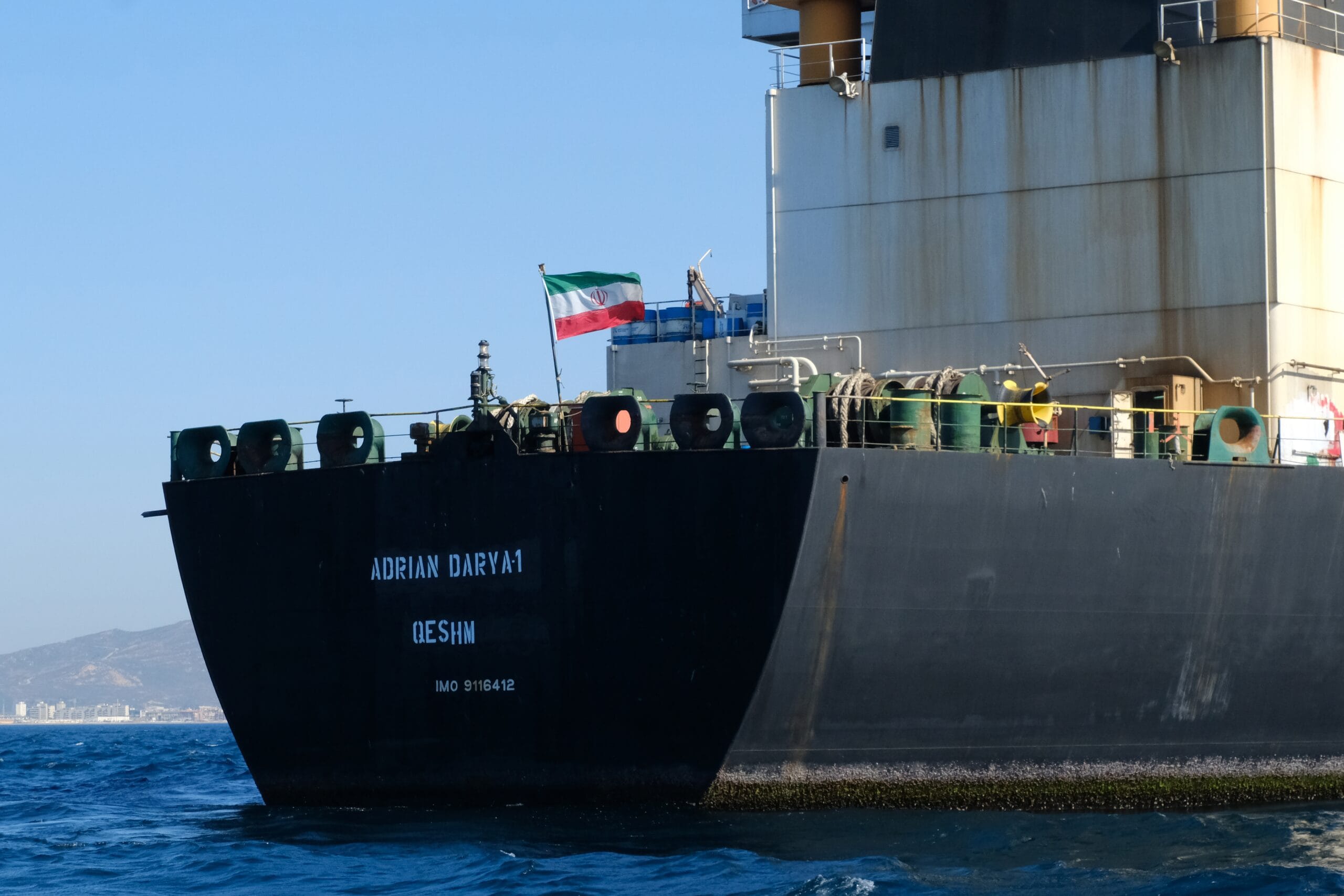
The Iran tanker threat directed at commercial vessels near Kuwait and Bahrain has raised a fresh risk for Gulf shipping. A warning attributed to Iran’s Islamic Revolutionary Guard Corps Navy told tanker crews in ports and anchorages in the two countries to evacuate immediately and claimed their vessels could be targeted.
The message was carried by media affiliated with the IRGC and accused Kuwait and Bahrain of supporting U.S. military activity. Its operational intent and the likelihood of an attack could not be independently verified. Neither the warning nor the allegations behind it should be treated as independently established facts.
How the Iran Tanker Threat Could Affect Gulf Shipping
The warning followed U.S. strikes on Iranian-linked vessels. In an official statement, U.S. Central Command said it destroyed five vessels it identified as IRGC tankers after what it described as an Iranian attempt to target an American warship. That account represents the U.S. military’s description of events.
Even without a confirmed attack plan, an Iran tanker threat can affect shipping decisions by increasing perceived risk around ports, anchorage areas and regional sea lanes. Operators may review routes, crew procedures and port calls, while insurers could reassess war-risk exposure if the security environment deteriorates.
The immediate market impact will depend on whether the warning is followed by verifiable military activity or remains rhetorical signaling. The Gulf is a critical route for oil and refined-product flows, so any disruption near Kuwait or Bahrain could increase freight and insurance costs. For now, the central issue is elevated uncertainty rather than evidence of a broad interruption to commercial shipping.
