


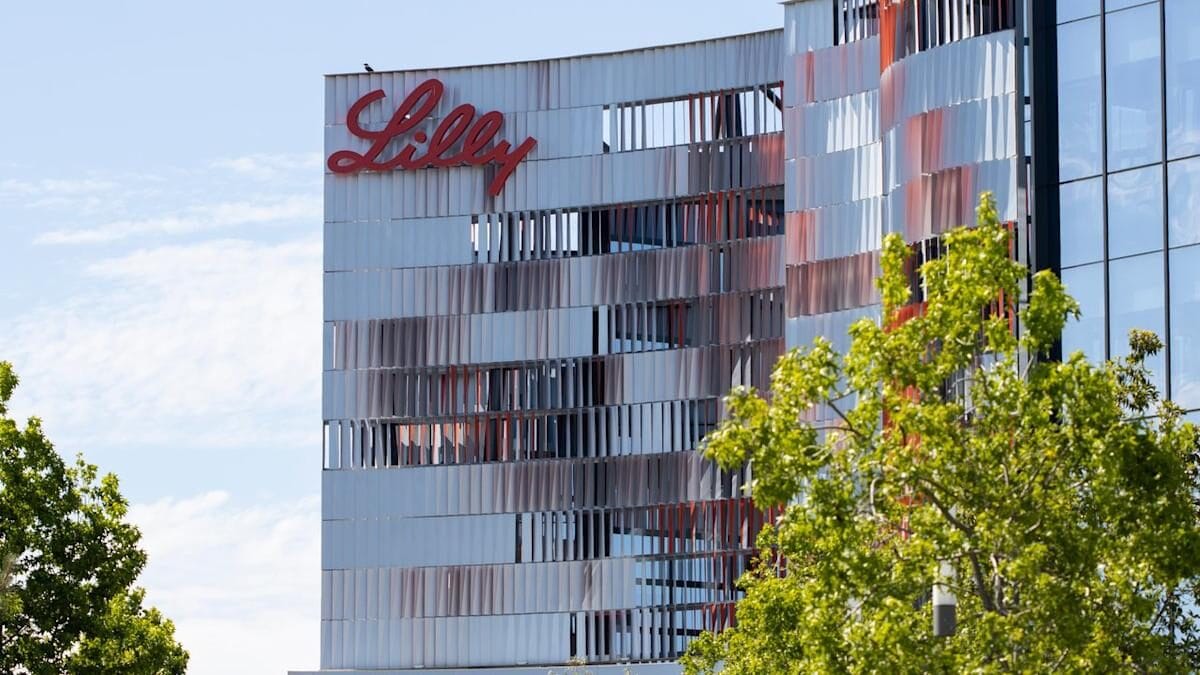
The Lilly Houston manufacturing plant has moved into construction, advancing a $6.5 billion project intended to expand U.S. production of active pharmaceutical ingredients. Eli Lilly (NYSE: LLY) expects the site to employ more than 600 people permanently and support about 4,000 construction jobs.
The Generation Park facility will manufacture ingredients for small-molecule and oligonucleotide medicines. Lilly said the planned products include Foundayo, the brand name for orforglipron, alongside other treatments in its pipeline.
Lilly Houston Manufacturing Plant Expands Domestic Capacity
In its official groundbreaking announcement, Lilly described Houston as one of 10 U.S. manufacturing sites announced since 2020 and the fifth focused on active pharmaceutical ingredients. The investment forms part of a broader $50 billion U.S. manufacturing expansion.
Active ingredients are the biologically effective components of medicines, making domestic capacity important for supply security as well as launch scale. Lilly plans to use automation, machine learning and integrated digital systems throughout the plant.
The company also announced a $12.5 million workforce-development relationship with San Jacinto College and a separate $2.5 million scholarship donation. Those programs are intended to create a local pipeline of technicians and other specialized workers.
Oral GLP-1 Demand Raises the Execution Stakes
Foundayo is an oral GLP-1 medicine that has been approved in the United States for chronic weight management, according to Lilly. The company is pursuing reviews in more than 40 countries and is targeting a broader international rollout in 2027.
The Houston investment gives Lilly more capacity to support that launch and future compounds, but construction timing, regulatory reviews and demand forecasts remain important variables. A large announced investment does not immediately translate into commercial output.
The plant’s multi-product design also gives the company flexibility beyond a single medicine. That can improve utilization over time, provided Lilly completes validation and meets the strict quality standards required for pharmaceutical production.
For investors, the project reinforces Lilly’s decision to bring more manufacturing in-house as its cardiometabolic portfolio grows. Future updates on commissioning, production volumes and launch progress will determine how quickly the new plant contributes to supply and revenue.
