


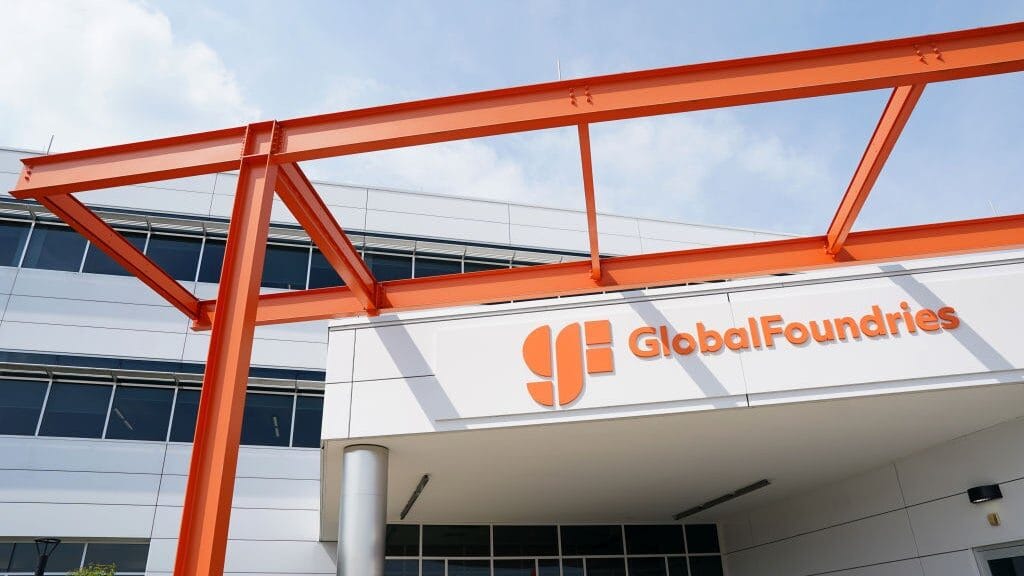
The GlobalFoundries Marvell agreement will expand capacity for silicon-germanium chip technology at GlobalFoundries’ Burlington, Vermont, facility. GlobalFoundries (NASDAQ: GFS) and Marvell Technology (NASDAQ: MRVL) said Thursday that the multiyear arrangement is intended to support growing demand for optical connectivity in AI and cloud data centers.
The companies have worked together for more than a decade. Their latest move concentrates on the high-speed links that transfer data between computing systems, an increasingly important bottleneck as AI clusters grow. The announcement did not provide a contract value or a specific production-volume target.
GlobalFoundries Marvell Agreement Focuses on Optical Links
Silicon-germanium, or SiGe, devices can serve demanding communications applications where speed and power efficiency matter. The expanded Vermont capacity is intended to support pluggable optics and newer near-package and co-packaged optical approaches, according to the companies.
GlobalFoundries lists company announcements on its investor press-release page. The demand argument is straightforward: faster AI accelerators are useful only if data can move among them at sufficient speed. Optical interconnects can help address distance and power limits in large computing networks.
The production focus on an existing U.S. facility also illustrates how specialized semiconductor processes, not only cutting-edge logic nodes, are part of the AI supply chain. The companies did not specify when the incremental capacity will be fully operational, so any near-term sales effect remains unclear.
Capacity Is a Strategic Signal, Not Reported Sales
For GlobalFoundries, a longer-term customer commitment may improve visibility for specialized manufacturing capacity. For Marvell, it can strengthen supply for its data-infrastructure products. Neither company disclosed how much revenue or profit the expanded agreement is expected to generate.
The GlobalFoundries Marvell agreement therefore supports an AI-infrastructure growth narrative but should not be treated as an immediate earnings forecast. Investors will need future disclosures on shipments, customer demand and capital spending to assess the financial impact of the additional capacity.
