


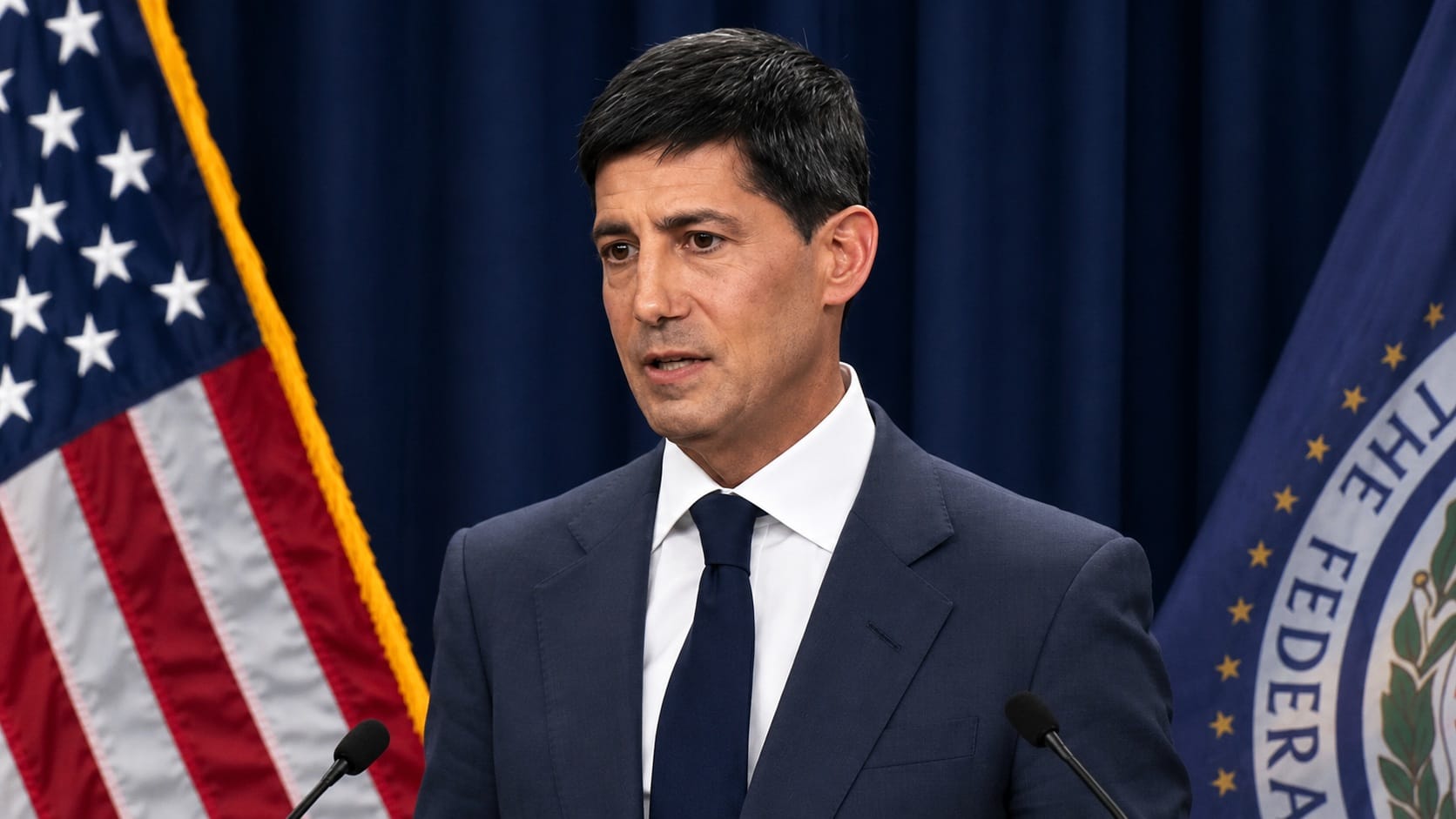
The first Federal Open Market Committee (FOMC) policy statement released under the leadership of Kevin Warsh, the new Chair of the U.S. Federal Reserve (Fed), caught the market’s attention not only because of the interest rate decision but also due to the statement’s significantly shorter length.
While the Fed’s June policy statement consisted of only 132 words, the April statement was 345 words long. This marked a significant simplification of the text. The structure of the statement was also altered; the policy decision was moved to the very beginning of the text, while the assessment of the economic outlook was kept quite brief.
Another striking change was the complete removal from the text of information regarding which members supported the decision or the reasons given by dissenting officials. This simplification was interpreted as a clear narrowing of the Fed’s forward guidance. The shorter text also means fewer minor phrasing changes—which market participants had previously analyzed word for word.
David Wilcox, a former Fed economist, pointed to the statement’s phrase: “The Committee reaffirmed its policy of maintaining ample reserves in the banking system.” According to Wilcox, the inclusion of this sentence is particularly significant because the Fed did not need to state it explicitly. Markets had anticipated that new Chair Warsh might defend a shift in balance sheet policy from an “abundant reserve” system to a tighter “scarce reserve” mechanism. Wilcox commented, “Today’s statement shows that, at least for now, they are not taking such a step.”
Analysts interpreted the statement released by the Fed as hawkish
Christopher Hodge, Chief Economist for North America at Natixis, commented that the decision generally conveyed a hawkish message. According to Hodge, the decision to keep interest rates steady, the removal of the previous dovish tone from the text, and the absence of any dissenting votes in the decision signal a tighter tone in the Fed’s communication. The statement’s conclusion, which stressed commitment to price stability, further reinforced this hawkish message.
Corpay Chief Market Strategist Carl Shamotta also described the Fed’s decision as a “short but not sweet” statement. Shamotta said that Warsh had quickly left his mark on the central bank’s communication strategy, that the official text had been significantly rewritten, and that forward guidance had been almost entirely removed. According to Shamotta, the committee has clearly shifted to a more hawkish stance. The upward revision of inflation expectations suggests that officials do not believe the U.S.-Iran agreement reached over the weekend will meaningfully ease price pressures. Furthermore, the fact that median forecasts point to at least one rate hike this year stands in sharp contrast to the rate cut expectations previously priced in by the markets.
Market analyses also pointed to a shift in the nature of the debate within the Fed. Previously, the main question was how long rates would remain on hold and when cuts would follow. With the latest projections, the focus of the debate appears to have shifted toward the possibility of a rate hike. The dot plot revealed that a significant portion of Fed officials believe the current interest rate level may not be sufficient to bring inflation back to the 2 percent target.
The Fed’s latest projections showed that policymakers have become more pessimistic about inflation compared to March. The rise in oil prices following the war in Iran is also believed to have contributed to this outlook.
According to median projections, the PCE price index is expected to rise by 3.6% year-over-year by the end of the year. This rate had been projected at 2.7% in March. The core PCE forecast was also raised from 2.7% to 3.3%.
However, no clear signs of a weakening in the labor market outlook were indicated. Fed officials set their year-end unemployment rate forecast at 4.3 percent. While this rate remained in line with the May actual, it was below the 4.4 percent level projected in March. This picture suggests that the Fed is increasingly convinced that the need to support the labor market through interest rate cuts has diminished.
