


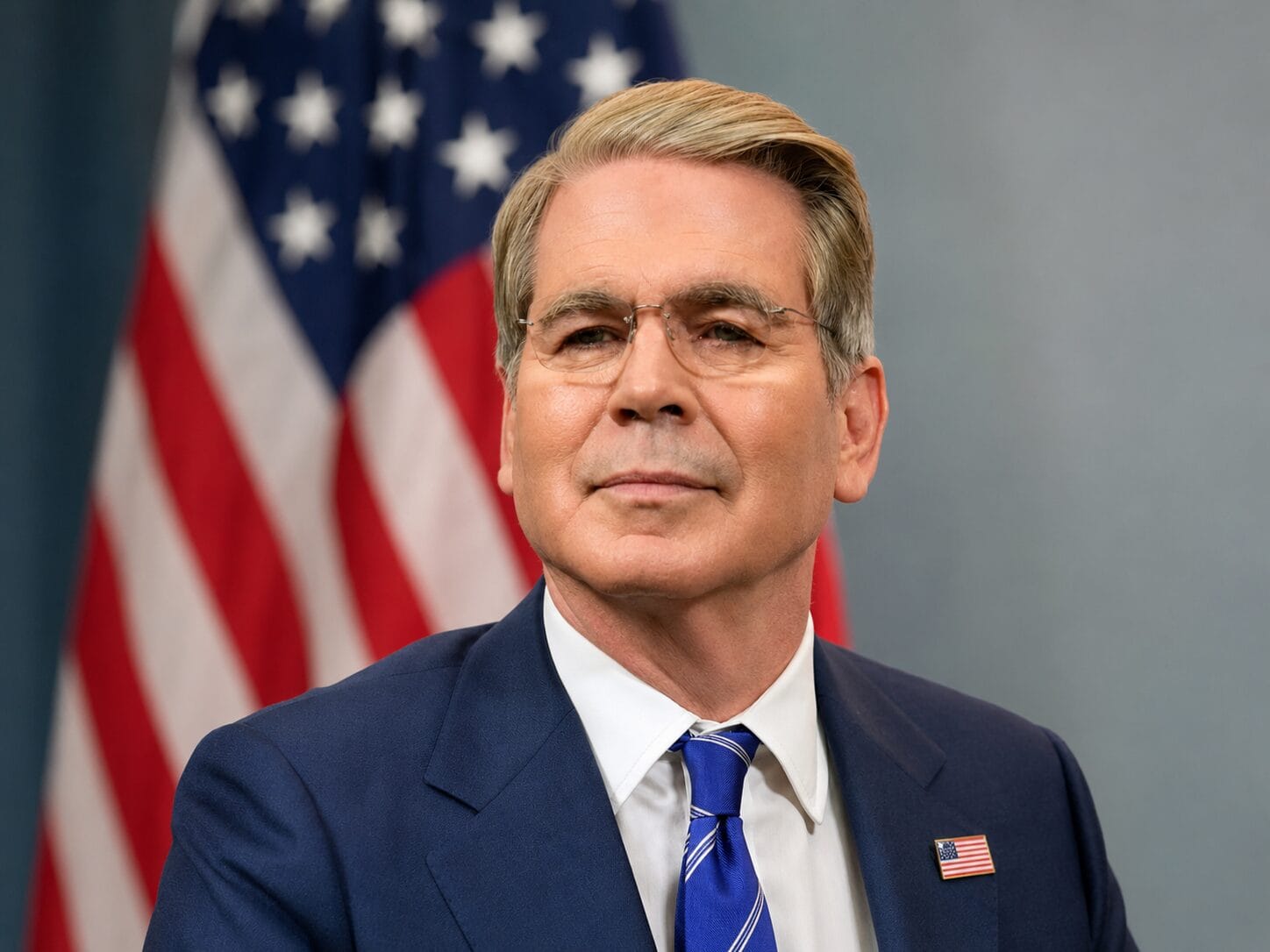
U.S. Treasury Secretary Scott Bessent said the Strait of Hormuz could become far less strategically important within two years as new oil pipelines reduce dependence on the critical Persian Gulf shipping route.
Speaking in North Carolina, Bessent argued that alternative pipeline infrastructure could significantly weaken the strait’s role in global energy markets.
“In two years, the Strait of Hormuz will be like a worthless piece of water,” Bessent said.
His comments came as tensions surrounding Iran remained elevated and U.S. equities moved lower, with the S&P 500 falling about 0.7% and trading near a one-month low.
Bessent Sees Pipeline Expansion Reducing Hormuz Dependence
The Strait of Hormuz remains one of the world’s most important energy chokepoints, linking major Gulf oil producers with global markets.
Bessent said new pipeline routes could allow more crude oil to bypass the waterway, reducing the economic leverage associated with controlling or disrupting shipping through the strait.
If that transition happens at scale, it could alter the strategic balance around one of the most closely watched corridors in global energy markets.
Treasury Secretary Signals Tougher Iran Sanctions
Bessent also said the U.S. is preparing additional sanctions against Iran.
He indicated that Washington will probably announce sanctions targeting a bank this week and again next week as part of a broader effort to intensify economic pressure on Tehran.
Bessent said the administration has “zero tolerance” for Iran and intends to “economically strangle it.”
He also said the U.S. has held private discussions with China regarding Iran.
Bessent Says Iran Still Has Significant Rebuilding Capacity
Despite sanctions and ongoing pressure, Bessent said roughly 85% to 90% of Iranian factories retain the ability to rebuild.
He also described Iran as likely possessing the world’s third-largest energy resource base, underscoring the country’s continued importance to global oil and gas markets.
Those comments highlight the tension at the center of U.S. policy: Iran remains economically vulnerable, but it also retains substantial industrial and energy capacity.
Markets React as Geopolitical Risk Rises
The S&P 500 was last down about 0.70%, near its lowest level in roughly a month, as investors weighed renewed geopolitical risk and the prospect of tighter sanctions.
Bessent’s remarks suggest the administration is pursuing a two-track strategy: increase near-term economic pressure on Iran while also supporting infrastructure that could reduce the world’s long-term dependence on the Strait of Hormuz.
