


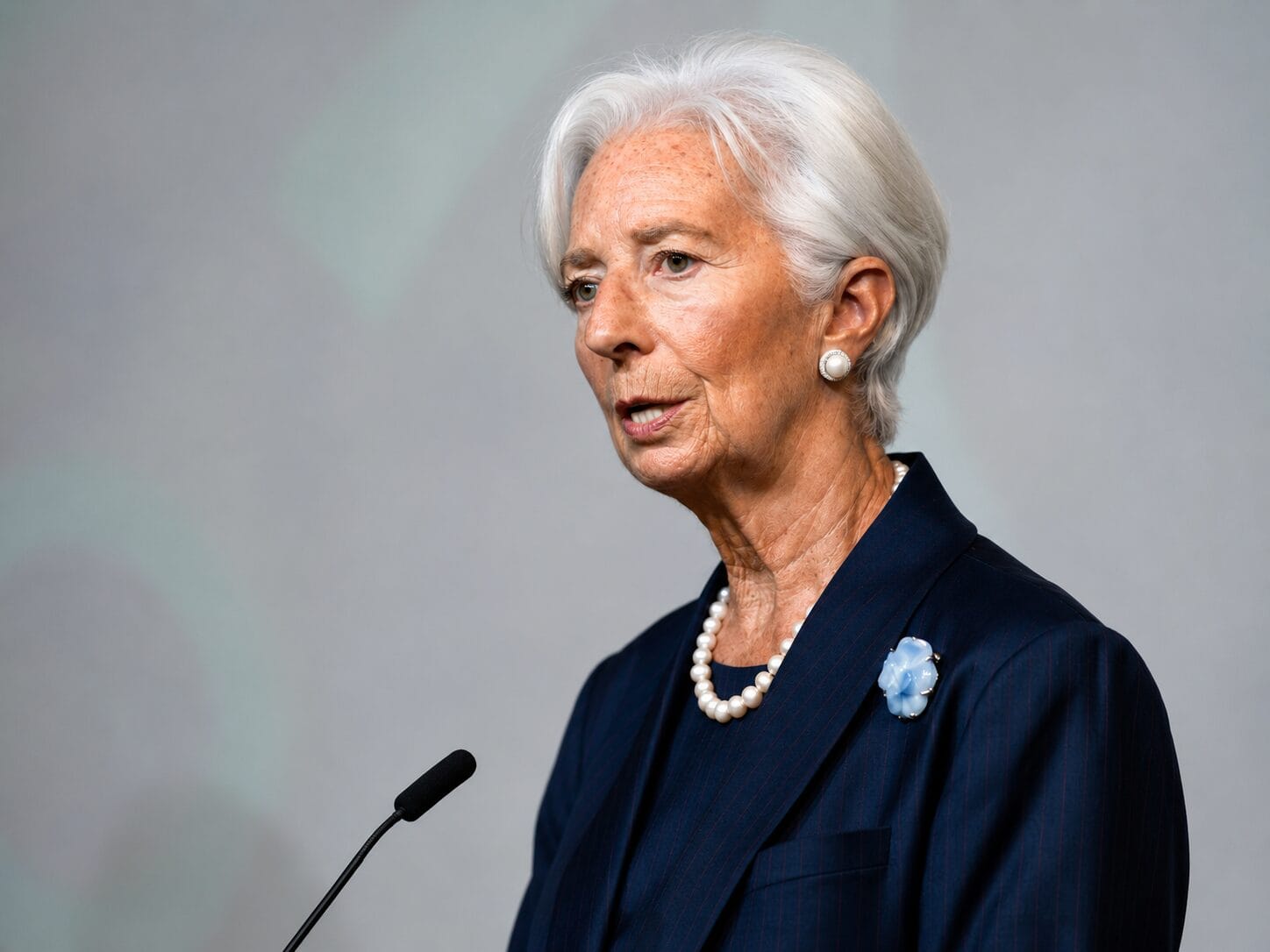
The European growth model is under pressure as the pillars that supported the region’s post-war expansion weaken, European Central Bank President Christine Lagarde said in remarks at the World Economic Forum’s International Business Council in Geneva.
Lagarde said Europe had benefited from expanding global trade, competitive mid-tech manufacturing supported by relatively cheap energy, and a stable rules-based international order. Each of those supports has become less reliable, she said.
More than 2,500 trade restrictions were implemented globally last year, while China now competes directly with the euro area in close to 40% of sectors where the bloc has a comparative advantage, up from around 25% in the early 2000s. EU electricity prices for energy-intensive industries were more than twice U.S. levels and about 50% above Chinese levels last year, she said.
Domestic Demand Supports the European Growth Model
Despite those headwinds, Lagarde said Europe retains substantial strengths, including the EU’s network of trade agreements, advanced manufacturing capabilities, skilled workers and an integrated market of 27 member states and 450 million consumers.
The euro area grew 1.5% last year, driven entirely by domestic demand, she said. Domestic demand also contributed positively to quarter-on-quarter growth of 0.4% in the second quarter of 2026 and is projected to remain the main source of growth this year.
Lagarde said the policy task is to turn that domestic resilience into a more durable growth engine by allowing firms to scale more effectively across the bloc. She identified fragmentation in the Single Market and capital markets as major obstacles to the spread of new technologies and investment.
European firms expect to allocate about 9% of total investment to artificial intelligence this year, according to survey evidence cited by Lagarde. But fragmented markets can limit technology diffusion, while innovative firms face a financing gap as they expand. EU scale-ups have raised roughly 50% less than San Francisco-based peers by their tenth year of operation, she said.
Lagarde pointed to proposals including an optional EU-wide corporate legal form, known as “EU Inc.,” and efforts to advance capital-market integration. Converting Europe’s market size into scale, she said, could help firms grow at home, accelerate technology adoption and lift productivity.
